.png)

HEPA Vacuuming During Professional Mould Remediation: Why It’s a Critical Step

HEPA Vacuuming During Professional Mould Remediation: Why It’s a Critical Step Vacuuming During Professional Mould Remediation: Why It’s a Critical Step
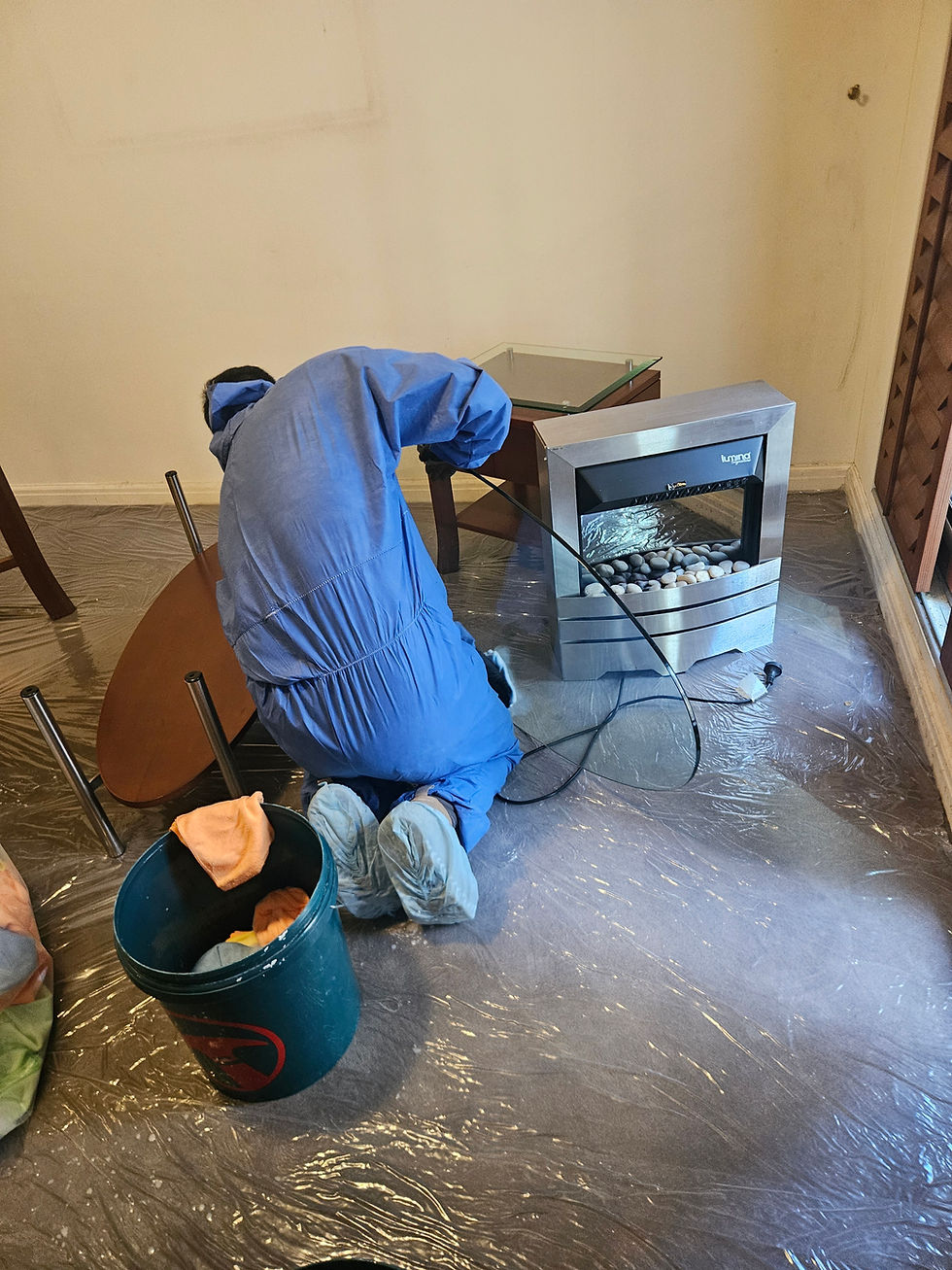
When mould contamination affects a property, simply wiping visible mould away is not enough. Microscopic mould spores and fungal fragments can remain on surfaces and become airborne, contributing to poor indoor air quality and potential health concerns.
One of the most important steps in professional mould remediation is HEPA vacuuming, a specialised cleaning process designed to capture microscopic contaminants from affected areas.
In this article, we'll explain what HEPA vacuuming is, why it matters, and how it forms part of the mould remediation process used by AAA Mould Removal throughout Sydney.
---
What Is HEPA Vacuuming?
HEPA vacuuming involves using a commercial-grade vacuum fitted with a High-Efficiency Particulate Air (HEPA) filter. These filters are designed to capture extremely small airborne particles, including:
Mould spores
Fungal fragments
Dust and debris
Bacteria
Fine particulate contamination
Unlike standard household vacuums, professional HEPA filtration systems help prevent captured particles from being released back into the indoor environment.
During mould remediation, HEPA vacuuming is commonly performed on:
Walls and ceilings
Flooring surfaces
Timber framing
Structural components
Building contents
Hard-to-reach surfaces within containment areas
---
Why Is HEPA Vacuuming Important During Mould Remediation?
Mould colonies release microscopic spores into the surrounding environment. Even after visible mould growth has been removed, residual spores can remain on surfaces.
HEPA vacuuming helps:
Reduce Surface Contamination
Professional HEPA vacuums remove mould spores and fine contamination particles that may not be visible to the naked eye.
Improve Indoor Air Quality
By capturing airborne and settled particles, HEPA vacuuming helps reduce contamination levels within the remediation area.
Support Effective Cleaning
HEPA vacuuming is typically performed before and after other cleaning procedures, helping prepare surfaces for detailed remediation work.
Assist Post-Remediation Verification (PRV)
Thorough cleaning and HEPA vacuuming help prepare a property for post-remediation inspections and verification testing.
Learn more about our Mould Testing & Monitoring Services.
---
HEPA Vacuuming in a Condition 2 Mould Remediation Project
The video above shows a professional mould technician carrying out HEPA vacuuming during a Condition 2 mould contamination remediation project.
Condition 2 contamination generally involves mould growth that exceeds normal background conditions but remains within a localized area requiring professional remediation procedures.
As part of the remediation process, technicians may perform:
HEPA vacuuming
Containment setup
Negative air pressure control
HEPA air scrubber operation
Damp wiping and detail cleaning
Structural drying (if water damage is present)
Final cleaning and verification preparation
Each project is assessed individually to determine the appropriate remediation strategy.
For more information about our remediation process, visit our Professional Mould Removal Service page.
Check out our video showing one of our mould technicians perform hepa vacuuming of affected property in Sydney CBD
---
The Role of HEPA Air Scrubbers and Containment
HEPA vacuuming is only one component of a comprehensive mould remediation strategy.
Professional projects may also involve:
Containment Systems
Containment barriers help prevent mould spores from spreading into unaffected areas of the property during remediation.
HEPA Air Scrubbers
Air scrubbers continuously filter airborne contaminants while remediation work is underway.
Structural Drying
Where moisture intrusion or flooding has occurred, professional drying equipment may be used to reduce moisture levels and address conditions that support mould growth.
Read our article:
---
Signs You May Need Professional Mould Remediation
You may benefit from a professional mould inspection if you notice:
Visible mould growth
Musty odours
Water damage or leaks
Condensation problems
Indoor air quality concerns
Recurring mould after cleaning
A professional inspection can help determine the extent of contamination and identify underlying moisture sources.
Book a professional mould inspection here:
---
Why Choose AAA Mould Removal?
AAA Mould Removal provides scientific mould remediation and structural drying services across Sydney.
Our team uses industry-standard equipment including:
Commercial HEPA vacuums
HEPA air scrubbers
LGR dehumidifiers
Desiccant dehumidifiers
Structural drying systems
Moisture mapping and monitoring equipment
We follow evidence-based remediation procedures and focus on identifying and addressing the underlying causes of mould growth.
---
Frequently Asked Questions
Does HEPA vacuuming remove mould completely?
HEPA vacuuming is an important part of mould remediation, but it is typically combined with other cleaning and remediation procedures to address contamination effectively.
Can I use a normal household vacuum on mould?
Standard household vacuums generally do not provide the same filtration performance as professional HEPA-filtered equipment and may redistribute fine particles into the air.
What is a HEPA filter?
A HEPA filter is a high-efficiency filtration system designed to capture very small airborne particles, including mould spores and fungal fragments.
Is HEPA vacuuming used after flood damage?
Yes. HEPA vacuuming is commonly incorporated into flood restoration and structural drying projects where mould contamination or fine particulate contamination may be present.
Do you provide mould remediation throughout Sydney?
Yes. AAA Mould Removal provides mould inspection, mould remediation, mould testing, indoor air quality assessments, and structural drying services throughout the Sydney metropolitan area.
---
About the Author
Michael Nguyen is the founder of AAA Mould Removal and a leading expert in mould remediation and building science.
He is IICRC Certified in Water Damage Restoration, Applied Microbial Remediation, and Applied Structural Drying. Michael studied Microbiology at RMIT University, is a licensed builder and carpenter with a Diploma in Building & Construction, and is currently completing a double Bachelor's degree in Medical Science and Environmental Science at Macquarie University.
He specialises in residential and commercial mould removal, black mould treatment, indoor air quality investigations, and water damage restoration throughout Sydney.
Contact AAA Mould Removal today for a comprehensive mould inspection and remediation assessment.
---
SEO Meta Title
HEPA Vacuuming During Mould Remediation | Sydney Mould Removal Experts
SEO Meta Description
Learn why HEPA vacuuming is a critical step in professional mould remediation. Discover how mould specialists use HEPA filtration to remove mould spores and improve indoor air quality across Sydney.


Comments