.png)
Hidden Wall Mould Remediation in Belmore NSW: Removing Water-Damaged Base Plates and Structural Timber

Hidden Wall Mould Remediation in Belmore NSW: Removing Water-Damaged Base Plates and Structural Timber
By "Michael Nguyen" (https://www.aaamouldremoval.com.au/aboutaaamouldremoval)
Mould contamination is not always visible on walls and ceilings. In many cases, the most significant mould growth occurs behind skirting boards, inside wall cavities, and within structural timber components where moisture remains hidden for extended periods.
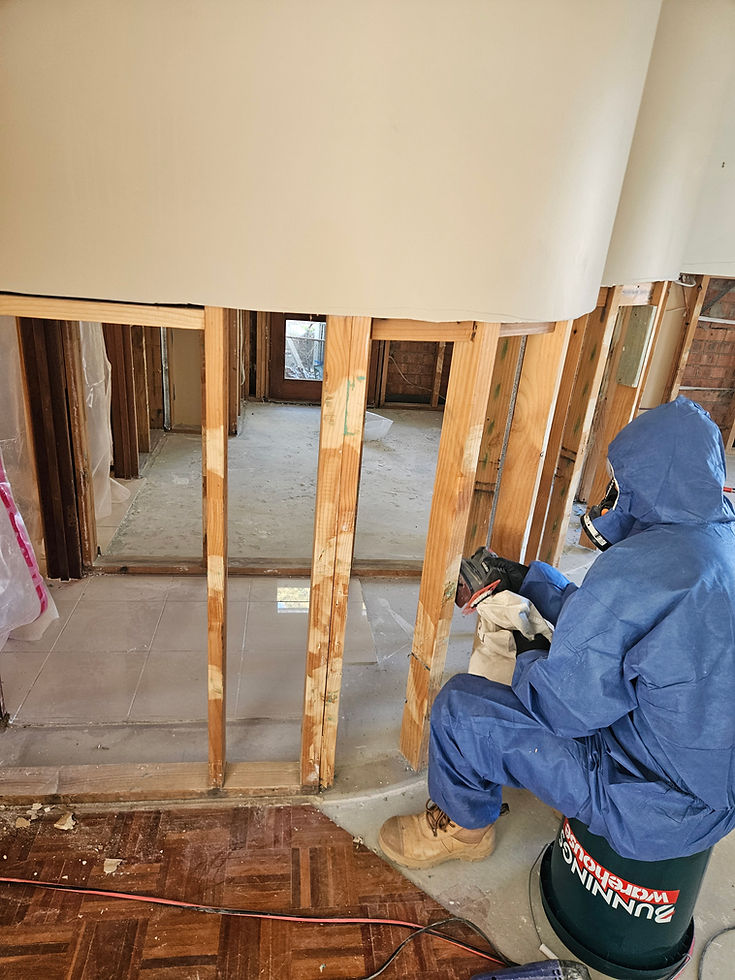
In this mould remediation project in Belmore, NSW, our team discovered severe mould contamination and water damage affecting timber base plates and wall framing following prolonged moisture intrusion.
As part of the remediation process, mould-contaminated building materials were carefully removed under controlled containment conditions to prevent cross-contamination throughout the property and to address contamination at its source.
Watch the project video here:
---
The Hidden Dangers of Mould Inside Wall Cavities
Many property owners are surprised to learn that visible mould often represents only a small portion of the contamination present.
When moisture enters wall systems through:
- Plumbing leaks
- Rising damp
- Roof leaks
- Flood damage
- Window leaks
- Building envelope failures
water can become trapped inside wall cavities and structural timber components.
These damp conditions create an ideal environment for mould growth, often allowing contamination to develop unnoticed behind walls for months or even years.
By the time mould becomes visible on painted surfaces, extensive hidden contamination may already exist.
---
What Are Base Plates?
A base plate is the horizontal timber member located at the bottom of a wall frame.
Base plates are particularly vulnerable to moisture exposure because they sit closest to the floor where water intrusion commonly occurs.
When prolonged moisture affects these structural timbers, mould contamination can become deeply embedded within the wood fibres.
In severe cases, remediation may require partial removal and replacement of affected materials.
---
Why Source Removal Was Necessary
One of the key principles of professional mould remediation is determining whether contaminated materials can be effectively cleaned or whether removal is necessary.
For this Belmore project, inspection identified:
- Severe mould growth
- Water-damaged structural timber
- Contaminated base plates
- Hidden mould within wall cavities
- Moisture-affected building materials
Because mould contamination had penetrated porous materials, source removal formed an important part of the remediation strategy.
Removing contaminated materials helps eliminate reservoirs of fungal growth that may continue releasing spores into the indoor environment.
Learn more about our professional Mould Removal Services:
---
AS-IICRC S520-Guided Mould Remediation
AAA Mould Removal follows remediation principles aligned with the AS-IICRC S520:2025 Standard for Professional Mould Remediation.
The standard emphasises:
- Source identification
- Moisture control
- Engineering controls
- Containment procedures
- Safe removal of contaminated materials
- Protection of occupants and workers
- Prevention of cross-contamination
Successful remediation focuses not only on removing mould but also on correcting the underlying conditions that allowed contamination to develop.
---
Containment and Negative Air Pressure
Before demolition and material removal commenced, the affected area was isolated using containment systems.
Containment helps:
- Prevent contamination spread
- Protect unaffected areas
- Reduce occupant exposure
- Control airborne mould spores
During the project, negative air pressure systems were used to maintain directional airflow and minimise contamination migration beyond the work area.
Negative air containment is a critical component of professional mould remediation involving demolition or material removal.
---
HEPA Air Filtration During Remediation
HEPA air scrubbers operated continuously throughout the project to capture airborne particles generated during remediation activities.
HEPA filtration assists in removing:
- Mould spores
- Fungal fragments
- Dust
- Fine particulate contamination
Combined with containment and negative pressure systems, HEPA filtration forms an important part of a comprehensive remediation strategy.
---
Moisture Mapping and Structural Drying
Mould growth cannot be effectively controlled unless the moisture source is identified and addressed.
As part of the project, moisture assessment and mapping were undertaken to determine the extent of water migration through affected materials.
This process helps identify:
- Hidden moisture reservoirs
- Wet building materials
- Moisture migration pathways
- Areas requiring structural drying
Professional drying equipment may then be used to reduce moisture levels and help restore building materials where appropriate.
Read more:
---
Signs You May Have Hidden Wall Mould
You may benefit from a professional mould inspection if you notice:
- Musty odours
- Bubbling paint
- Swollen skirting boards
- Water staining
- Recurring mould growth
- Soft wall surfaces
- Recent water damage
- Elevated indoor humidity
Hidden mould contamination can often remain undetected without specialist moisture investigation equipment.
Book a professional mould inspection:
---
Why Structural Timber Mould Should Be Taken Seriously
Mould growth affecting structural timber can continue spreading if moisture remains present.
Potential consequences include:
- Ongoing spore release
- Indoor air quality issues
- Material deterioration
- Hidden contamination spread
- Increased remediation costs if left untreated
Early intervention can help reduce the extent of damage and simplify the remediation process.
---
Mould Remediation Specialists in Belmore and Sydney
AAA Mould Removal provides professional mould inspections, mould testing, mould remediation, structural drying, and water damage restoration throughout Belmore and greater Sydney.
Our services include:
- Hidden wall mould remediation
- Structural timber mould removal
- Base plate mould remediation
- Water damage restoration
- HEPA filtration and containment
- Moisture investigations
- Indoor air quality assessments
- Post-remediation verification preparation
Whether contamination is visible or hidden within wall cavities, our team can assess the problem and recommend an appropriate remediation strategy.
---
Frequently Asked Questions
Can mould grow inside wall cavities?
Yes. Wall cavities are one of the most common locations for hidden mould growth because moisture can remain trapped and undetected for extended periods.
What is a mould-contaminated base plate?
A base plate is the bottom timber member of a wall frame. When exposed to prolonged moisture, mould can become embedded within the timber and may require remediation or replacement.
Does mouldy structural timber need to be removed?
Not always. The appropriate remediation approach depends on the extent of contamination, material condition, and whether cleaning can effectively address the affected area.
Why is negative air pressure used during mould remediation?
Negative air pressure helps contain airborne mould spores and reduce the risk of contamination spreading to unaffected parts of the building.
Do you service Belmore and surrounding suburbs?
Yes. AAA Mould Removal provides mould inspections, mould testing, mould remediation, structural drying, and water damage restoration throughout Belmore, Canterbury-Bankstown, and greater Sydney.
---
About the Author
Michael Nguyen is the founder of AAA Mould Removal and a leading expert in mould remediation and building science.
He is IICRC Certified in Water Damage Restoration, Applied Microbial Remediation, and Applied Structural Drying. Michael studied Microbiology at RMIT University, is a licensed builder and carpenter with a Diploma in Building & Construction, and is currently pursuing a double Bachelor's degree in Medical Science and Environmental Science at Macquarie University.
He specialises in residential and commercial mould remediation, structural drying, water damage restoration, indoor air quality investigations, and mould contamination assessments throughout Sydney.
Contact AAA Mould Removal today for a comprehensive mould inspection and remediation assessment.


Comments